
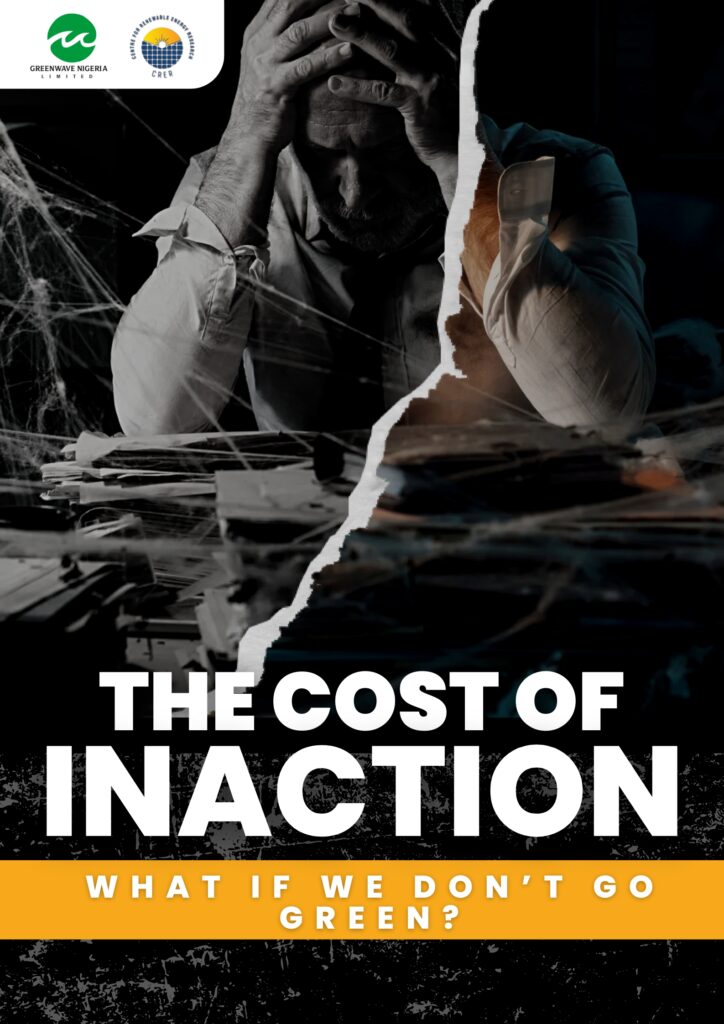
Let’s talk about the silent cost, not the one that shows up in national budgets or balance sheets, but the one that’s quietly draining Africa’s potential every single day we delay the green transition.
The question isn’t whether Africa can afford to go green, it’s whether we can afford not to.
If we continue on our current trajectory, the continent faces a compounded crisis. Rising temperatures threaten over 60% of Africa’s agricultural yield, even as over 600 million Africans remain without access to electricity. Climate-induced migration is already reshaping demographics, and urban centres are struggling to sustain both population growth and energy demand.
But here’s the paradox: Africa holds some of the richest renewable resources on the planet, abundant sun, strong wind corridors, vast hydro potential, and untapped geothermal reserves. Yet, fossil dependence, weak policy frameworks, and underinvestment in green infrastructure keep us tethered to an unsustainable model.
The real cost of inaction is not just environmental, it’s economic, social, and existential.
1. Economically, every year of delay means billions lost to climate-related damages, food insecurity, and unstable power supply.
2. Socially, it deepens inequality, as energy poverty remains one of the largest barriers to development and education.
3. Existentially, it accelerates the degradation of ecosystems that anchor our economies from fisheries to forests.
The irony is that the energy transition could be Africa’s greatest economic opportunity a chance to leapfrog outdated systems, industrialize sustainably, and become a net exporter of clean energy solutions.
Africa doesn’t need to replicate Europe’s energy path, we need to design our own, one that integrates local innovation, decentralized solutions, and climate-smart financing.
The cost of inaction is far greater than the cost of transition.
Because when the climate bill comes due, it won’t be denominated in dollars, it will be measured in livelihoods lost.
Now is not the time for hesitation, it’s the time for radical collaboration, investment, and execution.
What’s your take, where should Africa focus its green energy urgency first: policy reform, private investment, or tech innovation?
You’ve captured something critical: the real cost of delaying Africa’s green transition isn’t always visible in budgets — it shows up in lost livelihoods, fragile economies, and shrinking opportunity.
Africa is already feeling the pressure. Rising temperatures threaten agricultural productivity, while population growth drives surging energy demand. Yet over 600 million people still lack access to electricity. That’s more than an energy problem; it’s a brake on development, affecting education, healthcare, industry, and digital growth.
What makes this more frustrating is the contrast between challenge and potential. Africa holds some of the world’s richest renewable resources — vast solar exposure, strong wind corridors, hydropower, and geothermal reserves. The barrier isn’t nature; it’s systems. Weak policy frameworks, high perceived risk, and underinvestment keep clean energy from scaling at the speed required.
The cost of inaction is economic, social, and environmental. Economically, countries lose billions to climate damage, fuel imports, and unreliable grids that force businesses onto expensive diesel. Socially, energy poverty deepens inequality and limits opportunity. Environmentally, degraded ecosystems undermine agriculture, fisheries, and tourism.
Yet the transition itself could be a historic opportunity. Africa can leapfrog outdated infrastructure, build decentralized and resilient energy systems, and develop new industries around clean power and green fuels.
So where should urgency focus first? Policy reform. Clear, stable, and bankable regulations are what unlock private investment at scale. Once risk is reduced, capital can flow into renewables, grids, storage, and off-grid systems. Technology is already good enough — the priority is deployment, not waiting for breakthroughs.
The real question isn’t whether Africa can afford the transition. It’s whether it can afford the consequences of delay.